
BlogRoute Optimization
Route OptimizationFleet Management: Common Mistakes to Avoid for Better Deliveries
Discover the most common fleet management mistakes and learn how to reduce operating costs, optimize routes, improve driver performance, and make deliveries more efficient.
On this page
Fleet Management: Common Mistakes to Avoid for Better Deliveries
Managing a fleet of vehicles is essential for businesses that handle deliveries on a daily basis. Whether you operate a small fleet or manage dozens of drivers, poor fleet organization can quickly lead to higher operating costs, delivery delays, vehicle downtime, and lower customer satisfaction.
From route planning and driver management to vehicle maintenance and fuel consumption, fleet managers have to deal with many factors at the same time.
The good news is that most fleet management problems can be prevented with better processes, reliable data, and the right technology.
Here are the most common fleet management mistakes to avoid if you want to improve your delivery operations.
1. Failing to Plan Delivery Routes Properly
Poor route planning is one of the most costly mistakes in fleet management.
When drivers follow inefficient routes, they may travel unnecessary miles, spend more time in traffic, consume more fuel, and arrive late at their destinations.
Poor route planning can also result in missed deliveries and increased driver workloads.
How can you avoid this mistake?
Use route optimization software that can take multiple factors into account, including:
Number of deliveries
Customer locations
Delivery time windows
Vehicle capacities
Driver availability
Traffic conditions
Delivery priorities
Smart route planning can help reduce unnecessary mileage and allow your team to complete more deliveries with the same resources.
2. Ignoring Fuel Costs
Fuel is one of the major operating expenses for many delivery fleets.
Businesses that do not regularly monitor fuel consumption may struggle to identify vehicles, drivers, or routes that generate excessive costs.
High fuel consumption can result from:
Long and inefficient routes
Poor vehicle maintenance
Inefficient driving habits
Excessive idle time
Poor delivery allocation
The solution
Track fuel consumption, mileage, and vehicle performance regularly.
Route optimization can also help reduce unnecessary driving distances and lower fuel expenses.
Even small reductions in mileage across a large fleet can result in significant savings over time.
3. Neglecting Vehicle Maintenance
Waiting until a vehicle breaks down before performing maintenance can become extremely expensive.
A vehicle breakdown can result in:
Delayed deliveries
Expensive emergency repairs
Vehicle downtime
Increased workload for other drivers
Poor customer experience
How can you avoid this mistake?
Create a preventive maintenance schedule for every vehicle in your fleet.
Fleet managers should monitor:
Oil changes
Tire replacements
Vehicle inspections
Brake maintenance
Battery condition
Mileage
Previous repairs
Regular maintenance helps extend vehicle lifespan and reduces unexpected downtime.
4. Failing to Monitor Driver Performance
Drivers play a central role in delivery operations. However, some companies do not have reliable data to evaluate driver performance.
Without clear performance indicators, it becomes difficult to identify operational problems and determine where improvements are needed.
Useful metrics include:
Number of deliveries completed
Successful delivery rate
Delivery delays
Mileage
Average delivery time
Number of incidents
Route compliance
The goal is not simply to monitor drivers but to use performance data to improve the entire delivery operation.
5. Relying Too Much on Manual Processes
Managing a fleet with spreadsheets, phone calls, emails, and multiple disconnected tools can quickly become complicated.
As the number of deliveries increases, manual processes also increase the risk of human error.
For example, an address may be entered incorrectly, a driver may receive outdated information, or a delivery may be forgotten.
The solution
Automate repetitive tasks whenever possible, including:
Order creation
Delivery assignment
Route planning
Driver dispatching
Driver tracking
Customer notifications
Delivery status updates
A centralized platform allows everyone to work with the same information and improves coordination between teams.
6. Ignoring Vehicle Capacity
Not every vehicle can transport the same type or quantity of goods.
Ignoring vehicle capacity can result in poor order allocation, overloaded vehicles, or unnecessary additional trips.
Before assigning a delivery, fleet managers should consider:
Vehicle capacity
Available cargo space
Maximum weight
Type of goods
Required equipment
Special delivery requirements
Proper vehicle allocation helps prevent unnecessary trips and makes loading and delivery operations more efficient.
7. Failing to Consider Delivery Constraints
Some deliveries come with specific requirements.
For example, a customer may only be available between 10:00 AM and 12:00 PM. Another delivery may require a signature, special equipment, or a specific type of vehicle.
Ignoring these constraints can lead to failed deliveries and customer dissatisfaction.
Modern route planning systems allow businesses to include time windows and delivery constraints when creating routes.
This ensures that routes are not only shorter but also realistic and operationally feasible.
8. Lack of Visibility Across Fleet Operations
A company that does not know where its vehicles are or what is happening with its deliveries may struggle to respond quickly when problems occur.
Fleet managers should be able to answer questions such as:
Where is each driver?
Which deliveries have been completed?
Which deliveries are delayed?
Which vehicles are available?
Which driver can handle another delivery?
How many deliveries are still pending?
Having real-time visibility makes it easier to identify problems and take corrective action quickly.
9. Not Using Data to Make Decisions
Delivery data can provide valuable insights into fleet performance.
However, some companies collect large amounts of data without actually analyzing it.
Fleet managers should regularly review key performance indicators such as:
Average cost per delivery
Cost per mile
Successful delivery rate
Total mileage
Fuel consumption
Vehicle utilization
Deliveries per driver
Average delivery time
Analyzing these metrics helps businesses identify inefficiencies and make better operational decisions.
10. Using Disconnected Tools
Using several independent software solutions can create information silos.
For example, orders may be managed in one system, routes in another, and driver information in a separate application.
This forces employees to switch between different tools and manually transfer information, increasing the risk of errors.
A centralized delivery management platform can connect these different processes and provide a single source of information.
How to Improve Your Fleet Management
Effective fleet management relies on three key elements: accurate data, efficient processes, and the right technology.
Here are five practical steps you can take to improve your fleet operations.
1. Centralize Your Information
Keep orders, vehicles, drivers, customers, and delivery information in one centralized system.
This makes it easier for managers and dispatchers to access accurate information.
2. Automate Route Planning
Use route optimization technology to create efficient routes based on delivery locations, time windows, vehicle capacities, and driver constraints.
3. Monitor Performance
Define key performance indicators and review them regularly.
Tracking performance allows fleet managers to identify problems before they become major operational issues.
4. Prevent Problems Before They Happen
Implement preventive vehicle maintenance and regularly monitor vehicle performance.
Proactive maintenance reduces unexpected breakdowns and helps keep vehicles available for deliveries.
5. Improve Communication
Make sure dispatchers, drivers, and customers receive the right information at the right time.
Better communication reduces misunderstandings and improves the overall delivery experience.
Conclusion
Fleet management is about much more than simply managing vehicles and assigning drivers. It requires efficient planning, accurate information, continuous monitoring, and effective coordination.
Mistakes such as poor route planning, excessive manual processes, inadequate vehicle maintenance, inefficient vehicle allocation, and a lack of operational visibility can quickly increase costs and reduce delivery performance.
With a solution such as Dropioo, businesses can centralize their delivery operations, optimize routes, manage drivers, improve dispatching, and gain better visibility into their fleet.
A better-managed fleet means fewer unnecessary miles, lower operating costs, more efficient deliveries, and happier customers.
Ready to optimize your routes?
Start your free trial today - 30 days free, no credit card required.
Start free trialKeep reading
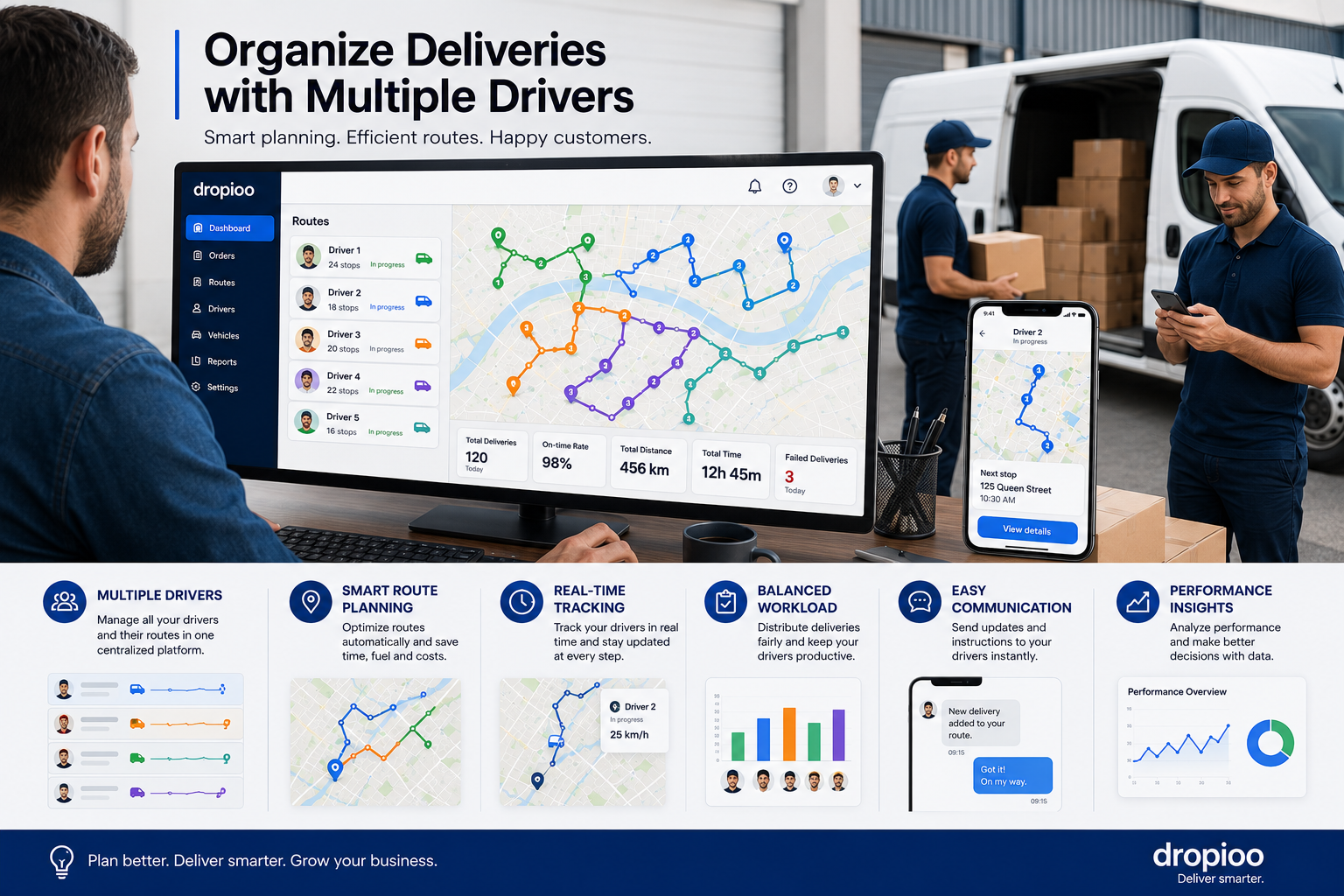
How to Organize Deliveries with Multiple Drivers
Managing multiple drivers can quickly become challenging as the number of deliveries increases. Learn how to efficiently assign orders, balance workloads, optimize routes, manage driver availability, and improve overall delivery performance.
Everything You Need to Know About Delivery and Shipping
Learn everything you need to know about delivery and shipping, from order processing and route planning to last-mile delivery and real-time tracking. Discover how Dropioo helps businesses optimize logistics, reduce costs, and improve delivery performance.