
BlogRoute Optimization
Route OptimizationWhat is route Optimization and why manual planning is costing you Money
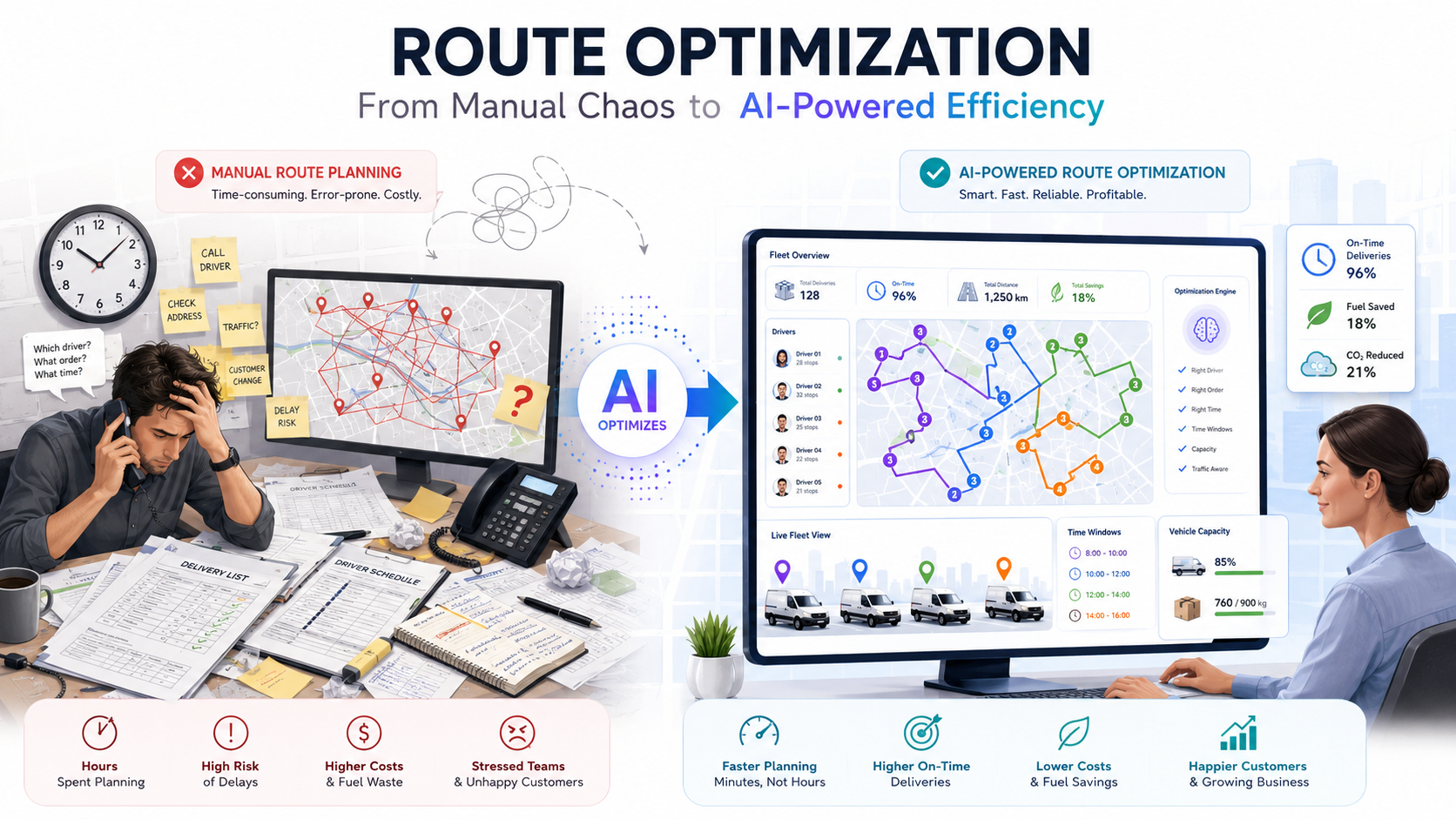
Route optimization isn't just about shorter distances — it's about fewer wasted hours, lower fuel bills, and happier customers.
On this page
What is route optimization?
Route optimization is the process of finding the most efficient set of routes for a fleet of drivers — accounting for delivery windows, vehicle capacity, driver skills, traffic patterns, and dozens of other constraints.
It's not the same as finding the shortest path. A route optimizer considers the entire operation: which driver should go where, in what order, and when — so that every delivery lands on time with the least possible cost.
How most SMB delivery companies still plan routes
Most delivery companies with 5 to 50 drivers still plan their routes manually. The typical workflow looks something like this:
Open Google Maps or a spreadsheet
Copy-paste delivery addresses one by one
Drag pins around until the route "looks right"
Call or text drivers with their assignments
Hope nothing changes mid-day
This process takes 1 to 3 hours every morning. And the result is almost never optimal — it's just the best a human can do under time pressure.
The hidden math: a dispatcher spending 2 hours a day on manual routing is burning ~500 hours a year on a problem an algorithm solves in 10 seconds.
The real cost of manual routing
Manual routing costs more than time. Here's what most operators underestimate:
Fuel waste. Without optimization, drivers take longer routes, make unnecessary backtracks, and waste 15–25% more fuel than they need to.
Failed deliveries. Without precise time-window management, drivers arrive when customers aren't home. Each failed delivery costs $12–22 to reattempt.
Dispatcher burnout. Spending 3 hours every morning on routing means your best operational brain is unavailable for everything else — customer issues, driver management, growth planning.
Scaling ceiling. Manual routing breaks at around 5–8 drivers. Beyond that, the complexity grows exponentially and no spreadsheet can keep up.
How AI route optimization works
Modern route optimization engines use algorithms (often based on variations of the Vehicle Routing Problem) combined with real-world data to find near-optimal solutions in seconds.
Here's what happens when you use a tool like Dropioo:
You import your orders (CSV, Excel, or API sync)
The AI engine processes all constraints: time windows, driver availability, vehicle capacity, skills required, depot locations
In under 10 seconds, optimized routes are generated for your entire fleet
Routes are pushed directly to your drivers' mobile app
No dragging pins. No guessing. No 3-hour morning ritual.
When to switch from manual to optimized routing
If any of these sound familiar, you're ready:
You spend more than 30 minutes a day planning routes
You have more than 3 drivers
Customers complain about late or missed deliveries
Your fuel costs keep climbing without explanation
Adding a new driver feels like rebuilding your entire system
Getting started
Most route optimization tools offer a free trial. The best way to evaluate is to import a real day's worth of orders and compare the optimized routes to what you would have planned manually.
The difference is usually obvious within the first run.
Ready to optimize your routes?
Start your free trial today - 30 days free, no credit card required.
Start free trialKeep reading
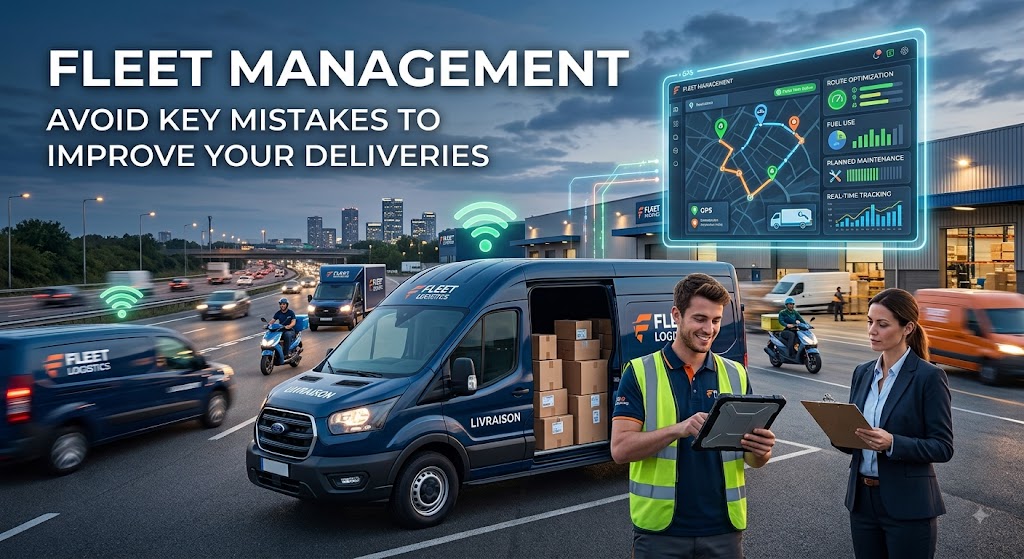
Fleet Management: Common Mistakes to Avoid for Better Deliveries
Discover the most common fleet management mistakes and learn how to reduce operating costs, optimize routes, improve driver performance, and make deliveries more efficient.
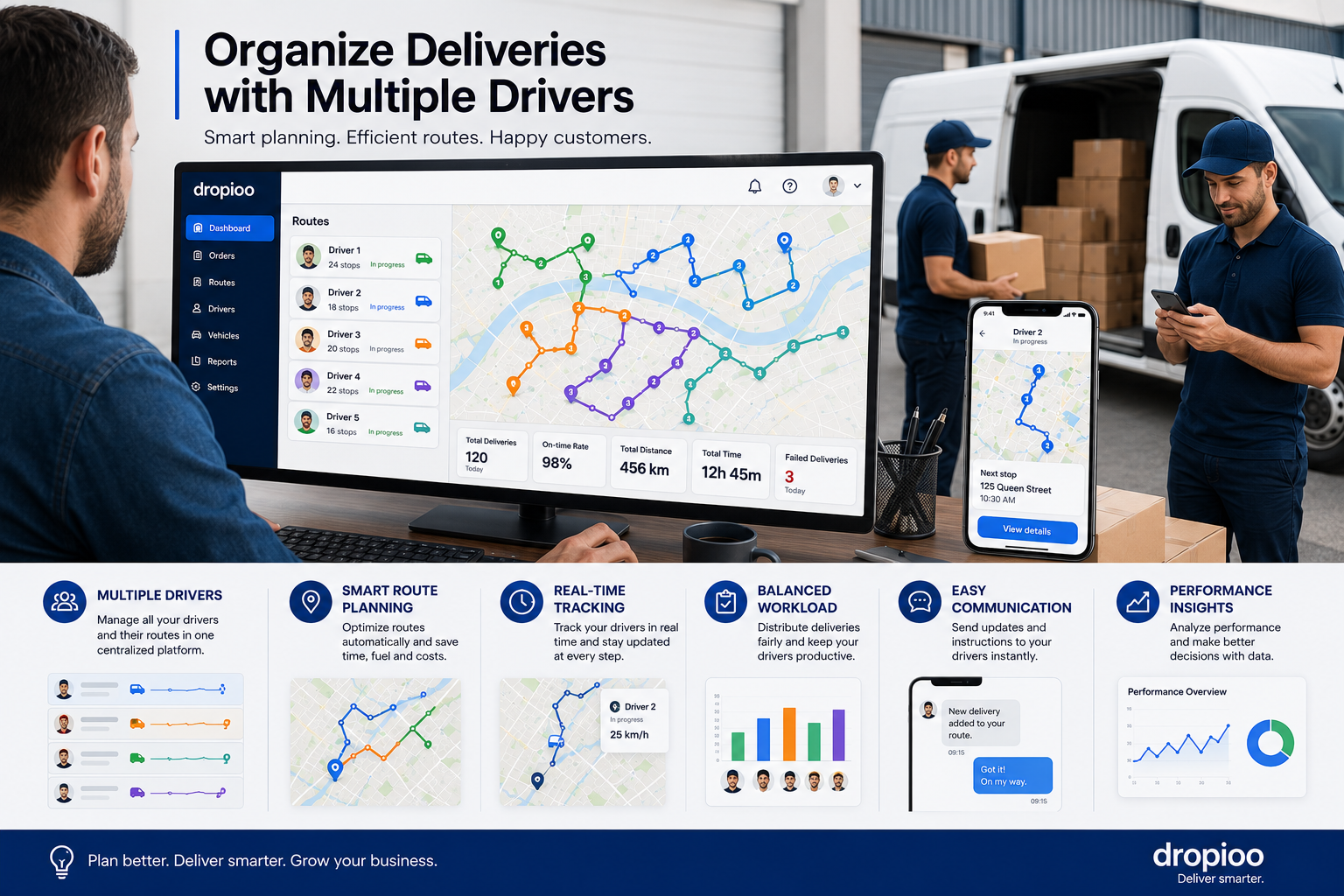
How to Organize Deliveries with Multiple Drivers
Managing multiple drivers can quickly become challenging as the number of deliveries increases. Learn how to efficiently assign orders, balance workloads, optimize routes, manage driver availability, and improve overall delivery performance.